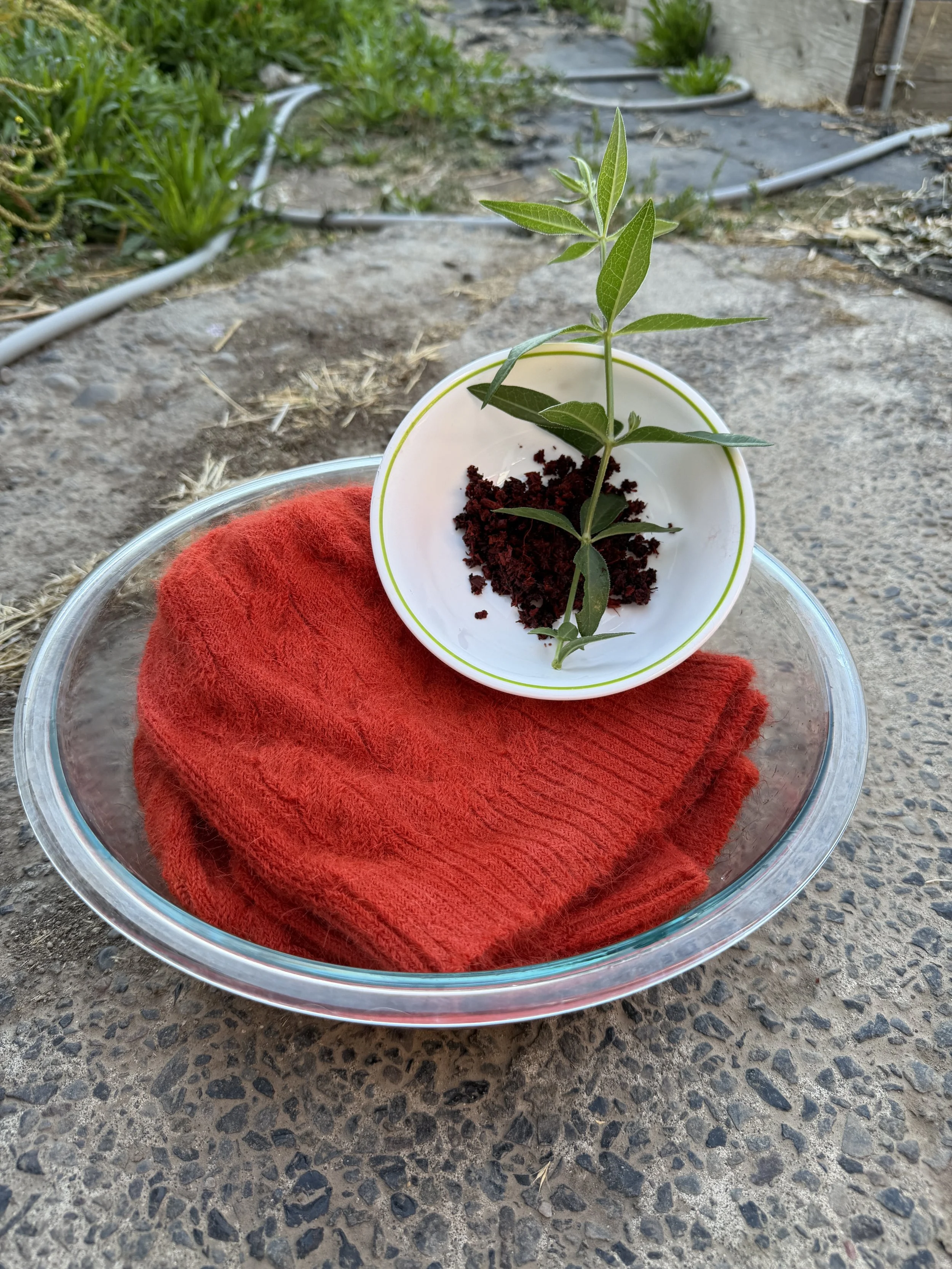
Slow Color - Six Short Years
There are faster ways to make red.
I could buy a bottle of dye, measure out a powder, mix it into a pot and have a predictable shade by lunchtime.
Instead, I planted madder root in 2020, and then I waited.
Madder root is one of the plants that makes growing natural color such a fascinating (and occasionally ridiculous) pursuit. The color isn't in the flowers. It's not in the highly prolific, sticky, grab-your-pants-as-you-walk-by-leaves, either. It's underground, slowly developing inside the roots.
And developing enough pigment takes years.
So when I planted those little madder plants back in 2020, I wasn't thinking about this year's Harvest Knitwear Collection.
I was thinking about the future, like farmers do.
Growing color takes patience
Madder, or Rubia tinctorum, has been used for centuries to produce red dyes. The roots contain the pigments that create those beautiful shades, but the roots need lots of time to develop enough pigment to make harvesting worthwhile.
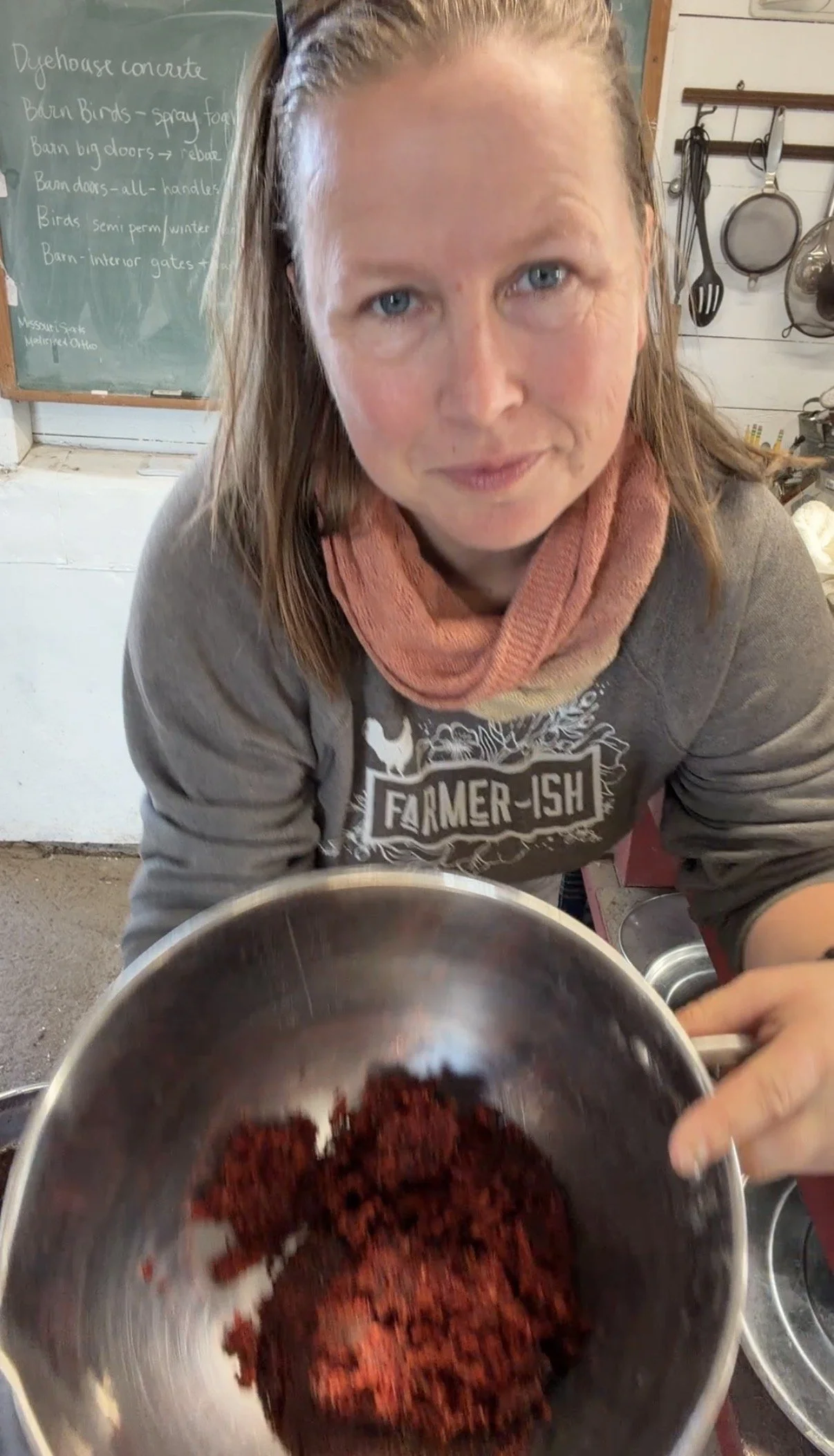
That's a very different mindset from most of the things we grow in the garden.
Plant a lettuce seed; you're thinking about lunch. Plant a tomato; you're thinking about summer.
But when you plant madder, you're thinking several years down the road.
My madder grows in dedicated boxes in the dye garden, where I can keep it contained and give those roots the time they need. And the raised boxes makes digging them up easier - ask me how I learned that lesson!
And then, eventually, comes the moment when waiting turns into harvesting.
The reds I'm waiting for
Madder is one of my favorite dye plants because of the range of color it can produce.
Depending on the dye process (read: heat and the speed of said heat), the fiber, and all the little variables that make natural dyeing so wonderfully unpredictable, madder can give me everything from rich reds and deep crimsons, to warm rosy shades, pinks and even beautiful corals.
They are colors with depth.
And most certainly aren’t hues that look like something that came out of a bottle.
And that's precisely what I love about them.
Natural dyeing isn't about forcing nature to give me an exact Pantone number. Though I do strive for some repeatability. It's really more about working with what the plant has to offer and seeing what happens when that pigment meets the fiber.
Even when I'm aiming for a particular color, there are always subtle variations.
That's part of the beauty.
And then there's the year 2020
I'll admit it: there's something satisfying about looking at a box of madder and realizing that these plants were first sown in 2020.
We all remember 2020.
It was a strange year. A difficult year. A year when so many plans were put on hold and the future felt particularly uncertain.
Meanwhile, in a raised box of soil and alpaca poo just outside the farm store, and beside my dye studio, right along where the boy herd grazes, something was quietly getting started.
Roots were growing.
No announcements.
No timeline.
No idea what the next few years would look like.
Just growth.
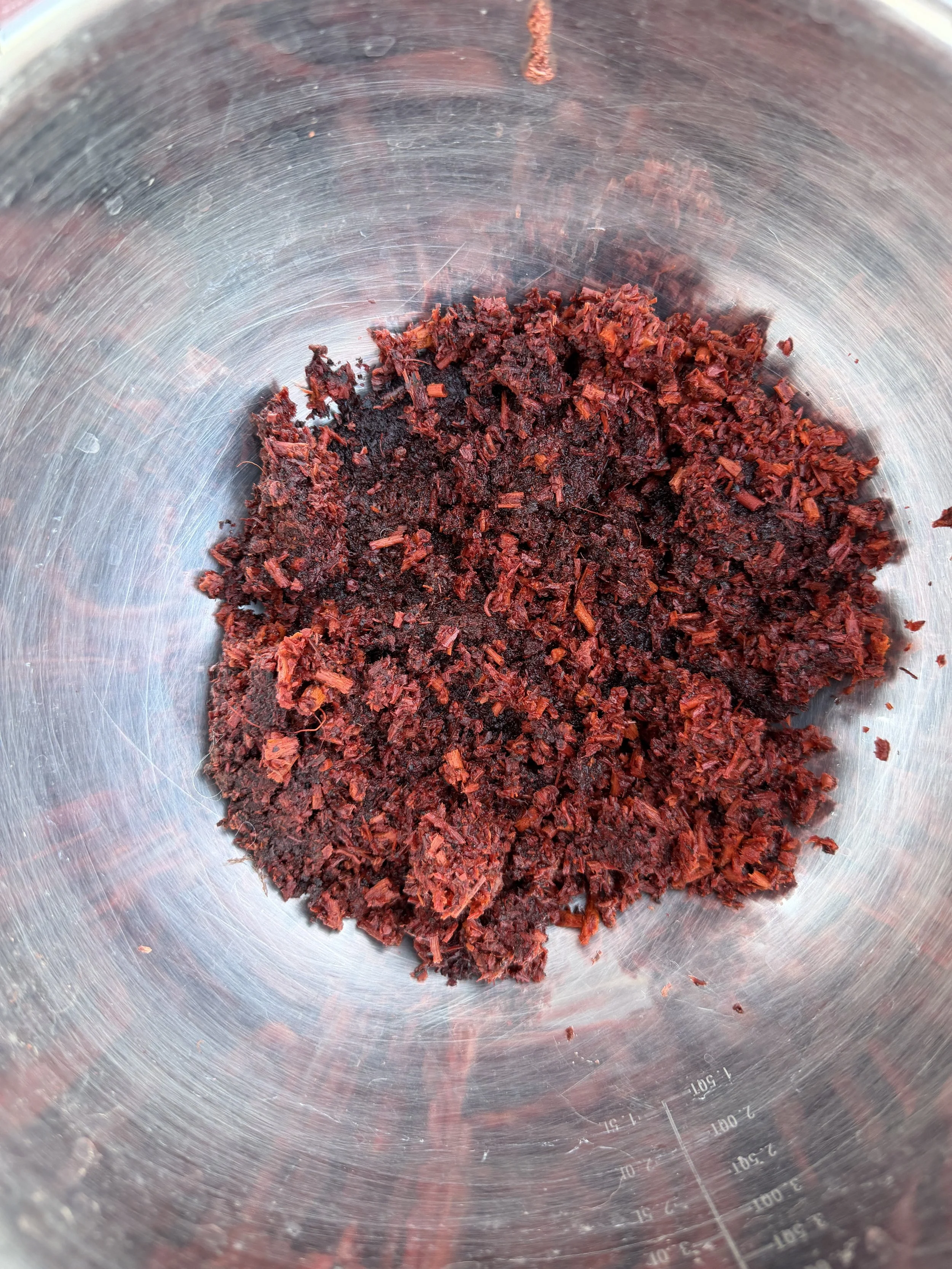
Full disclosure - I’ve pinched on it these last few years. If you’ve come for a tour, it’s one of my favorite reveals. Digging out a clump, dusting off the dirt and slicing a piece to reveal orangey red roots.
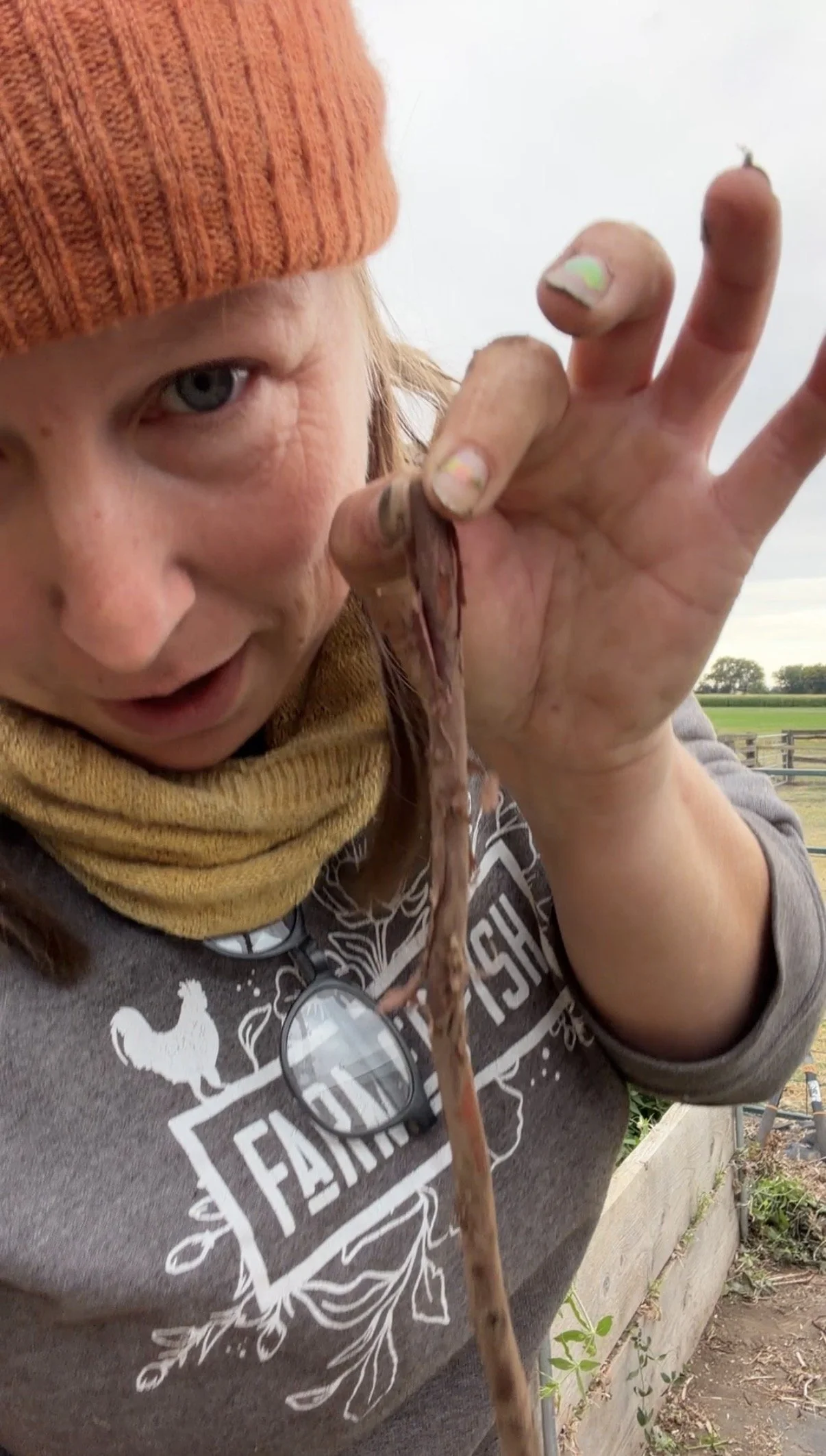
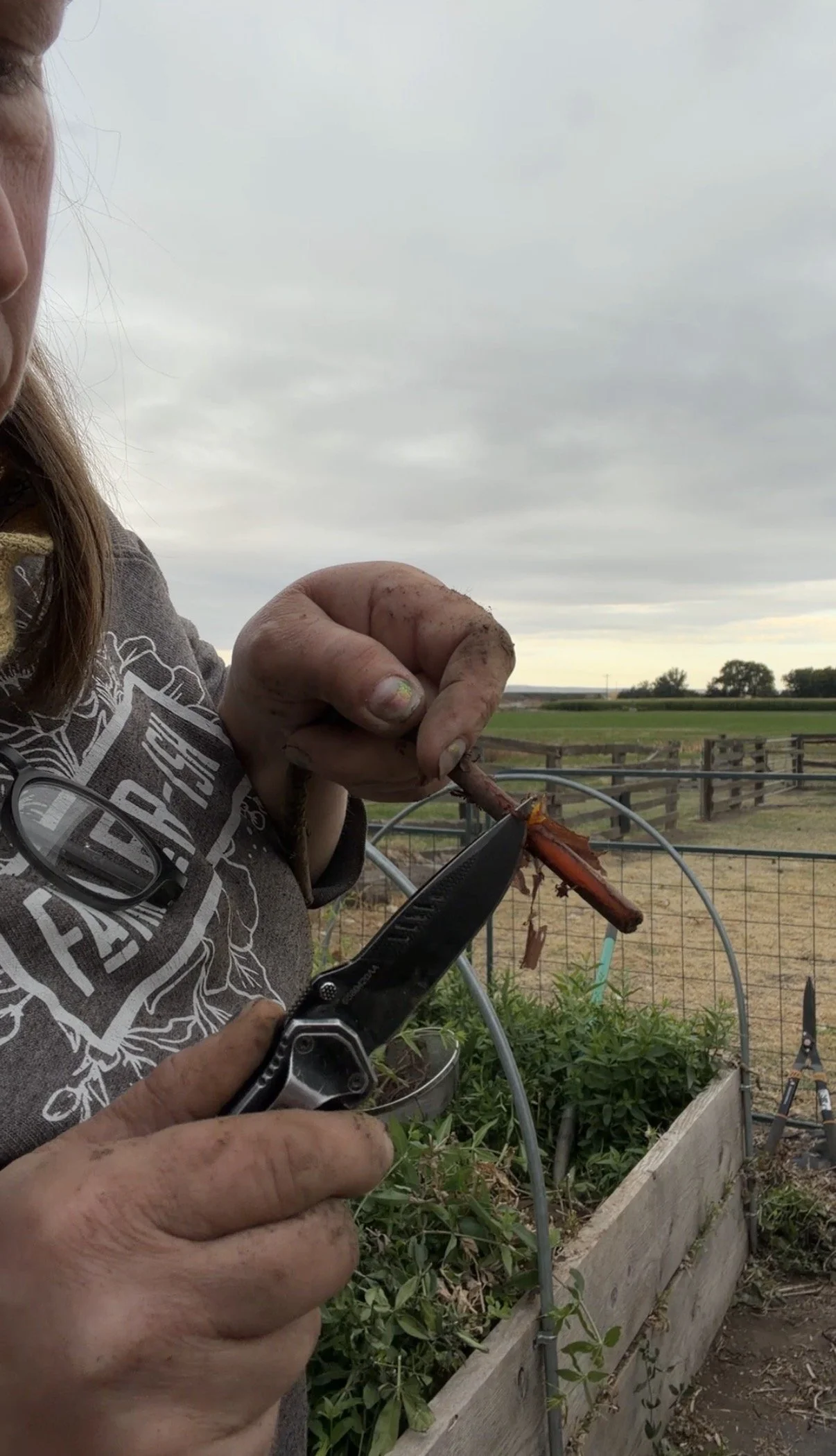
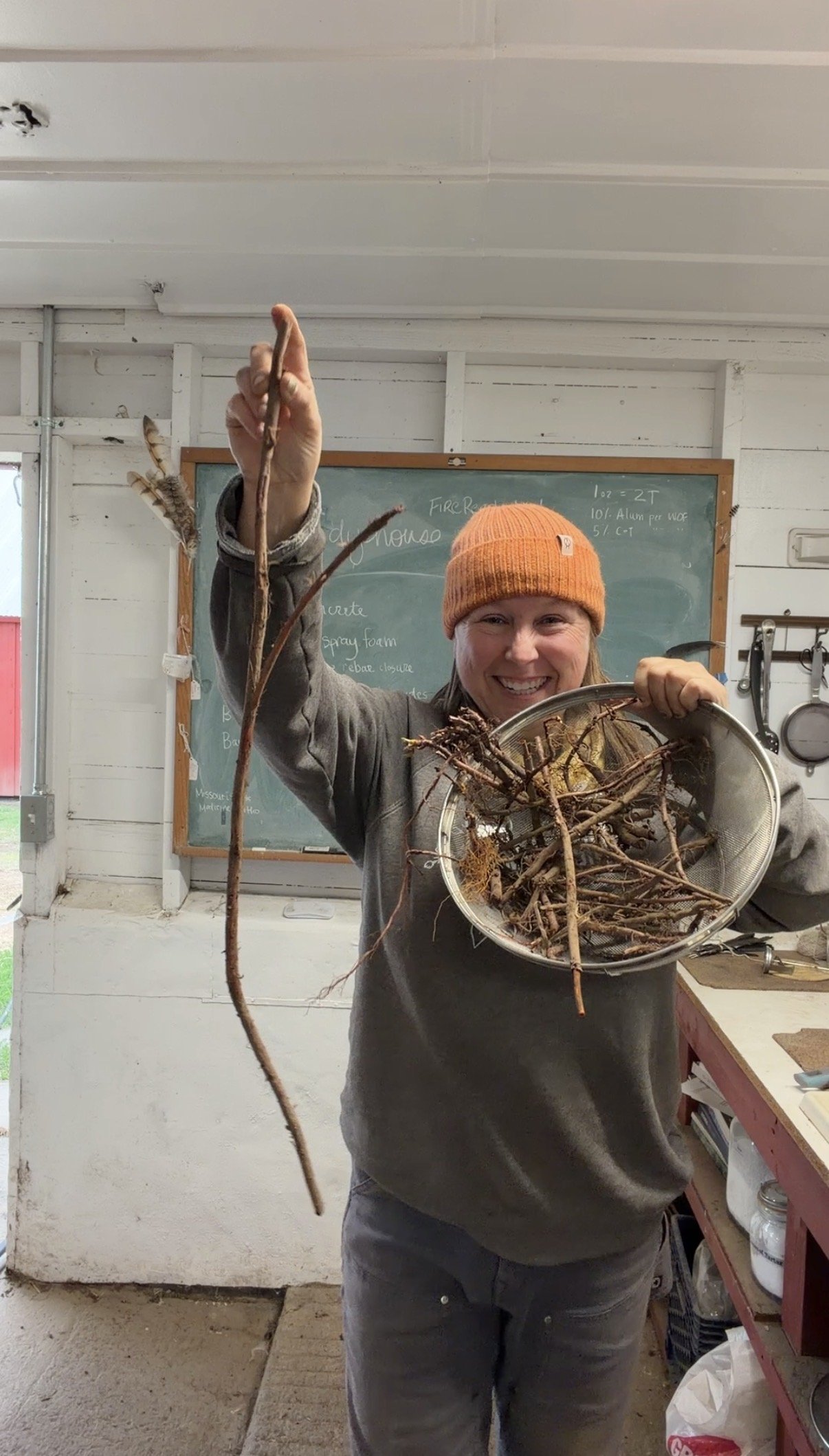
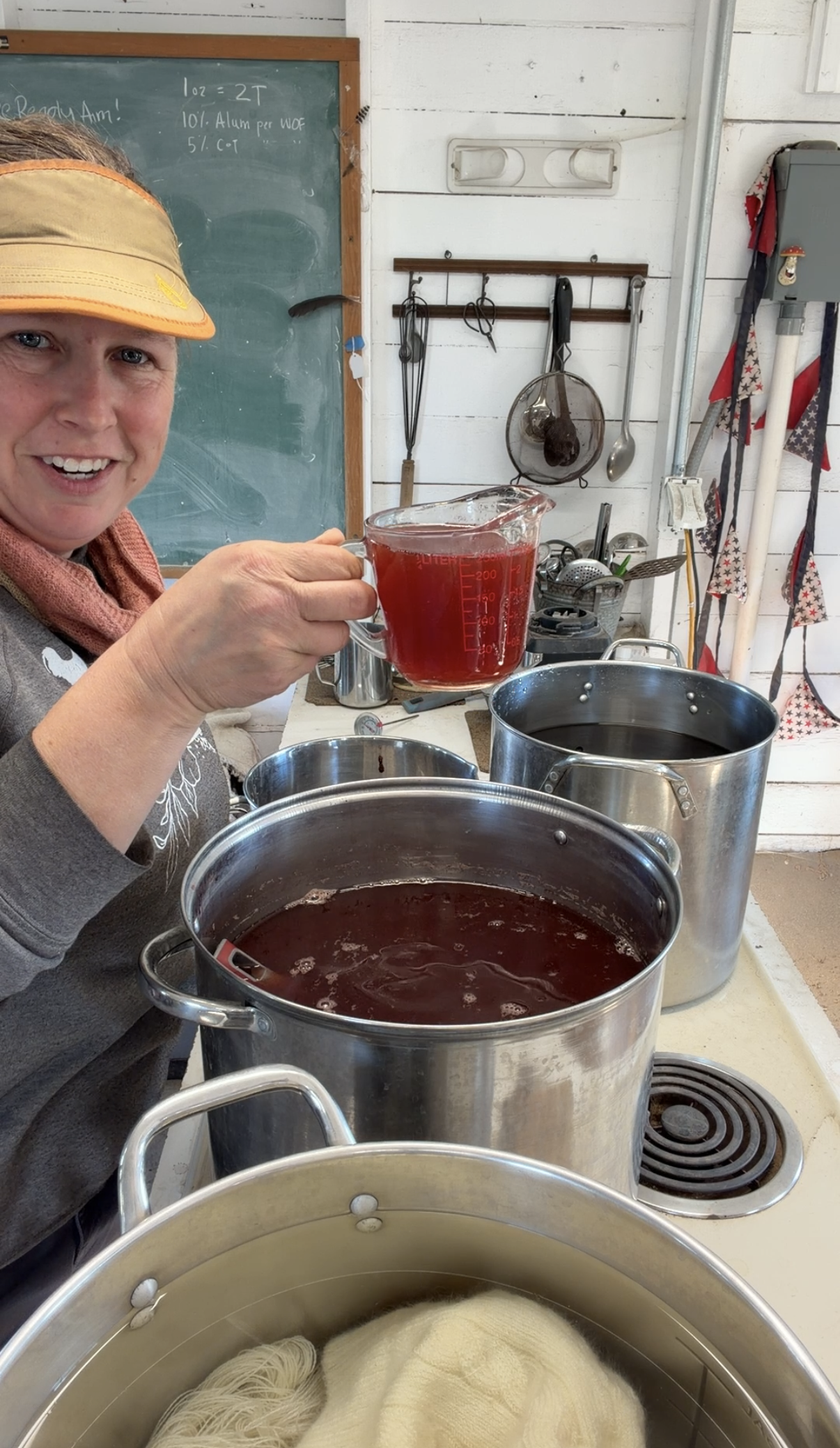
Six years later, those roots are helping create the colors for this year's Harvest Knitwear Collection.
It feels like magic, because it is. To me, at least.
From root to knitwear
Of course, madder is only one part of the journey.
The alpacas grew the fiber.
The fiber went to the mill.
The mill turned it into yarn.
And eventually, that yarn will come back to the farm, where I'll turn to the dye garden.
I'll harvest the madder roots, prepare the dye bath, and begin the process of turning all those years underground into color.
Then drying, finishing, photographing and, finally, offering the finished pieces to you.
By the time you see a red or coral piece in the Harvest Yarn & Knitwear Collection, you're really looking at a story that started years ago.
And that's what makes this Collection so different from anything I could simply order and have shipped to the farm.
The fiber has a history.
The color has a history.
And this year's Collection carries both.
Growing color, one season at a time
This is why I keep growing dye plants.
Yes, I love the colors & the process
But I also love the patience required.
Madder root doesn't care about our schedules.
It doesn't care when the Collection is supposed to launch.
It doesn't care about trends or seasons or what color is supposed to be popular this year.
It just grows.
And sometimes the best things happen when we're willing to let them.
This year's Harvest Knitwear Collection is still taking shape.
The yarn is making its way home.
The knitting is ahead.
And soon, these six-year-old roots will have their turn.
I can't wait to see what color they give us.