
Nest Helpers
There’s a certain kind of quiet satisfaction that comes from using what you already have - from finding purpose in the leftover bits, the seconds, the not-quite-perfect pieces that still have something to give.
That’s exactly where our Nest Helpers began.
On a working alpaca farm, there’s always fiber. Beautiful, soft, luxurious fiber… and then there’s what we call the “seconds.” These are the shorter cuts, the bits that don’t make it into yarn, the pieces that don’t quite meet the standard for spinning but are still full of warmth and usefulness. For a long time, I held onto these fibers, knowing they had value - just not entirely sure what form that would take.
At the same time, like most farms, we also accumulate materials that get reused again and again. In this case: chicken wire. Not new, not pristine, but sturdy and perfectly functional. The kind of thing you keep because you know someday, it’ll come in handy.
Nest Helpers are what happened when those two things came together.
Each one is made by shaping reclaimed chicken wire into a simple, organic form and filling it with those soft alpaca fiber seconds. Because each one is shaped and filled by hand, no two are exactly alike - every Nest Helper is a small, one-of-a-kind piece.
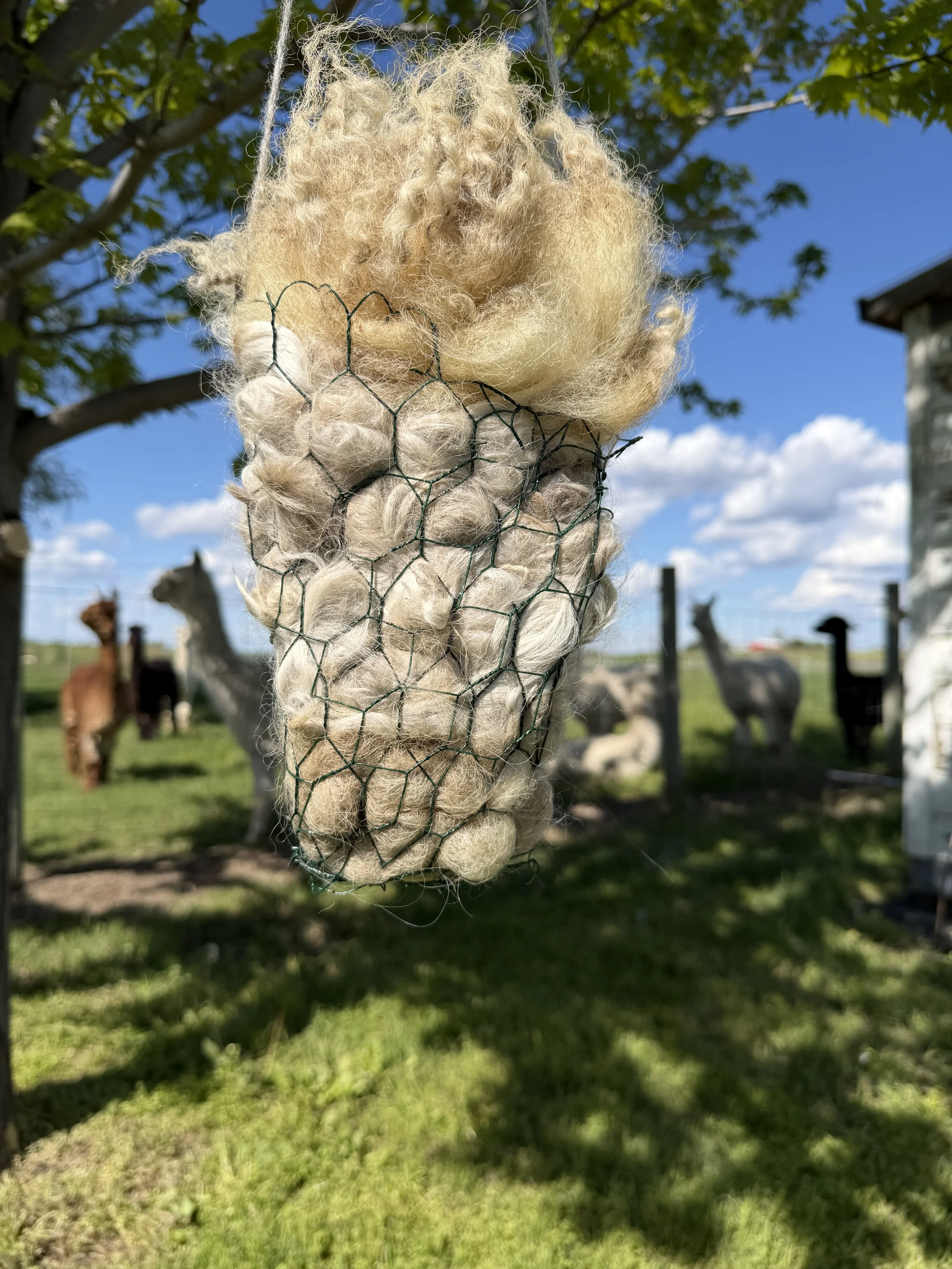
It’s not complicated. It’s not fussy. But it is intentional. Instead of discarding materials that still have life in them, they’re brought together into something useful again - something that extends beyond the farm itself.
Because the real magic happens when you hang one outside.
In the spring, as birds begin building their nests, they’re constantly searching for materials - soft fibers, bits of fluff, anything that will help insulate and protect what they’re creating. Alpaca fiber is naturally warm, breathable, and gentle, making it an ideal nesting material. Along with our sheep’s strong curly locks. And when it’s offered in a place they can easily access, they come.
It might not happen instantly. Sometimes it takes a little patience. But then one day, you notice it - a small tuft missing, a bird returning again and again, gathering what it needs. It’s a quiet exchange. A small, almost invisible moment of connection between the work happening here on the farm and the wild rhythms just beyond it.
And there is no shortage of bird life here.
Beyond our forthcoming ducklings (who will happily take on garden pest control), the farm is home to a rotating cast of feathered visitors and residents - owls calling at night, hawks circling overhead, and during the day magpies, starlings, kestrels, flickers, and more. They’re part of the daily rhythm here, as much as the alpacas themselves. Nest Helpers simply offer one small way to support that ecosystem - to give something back.
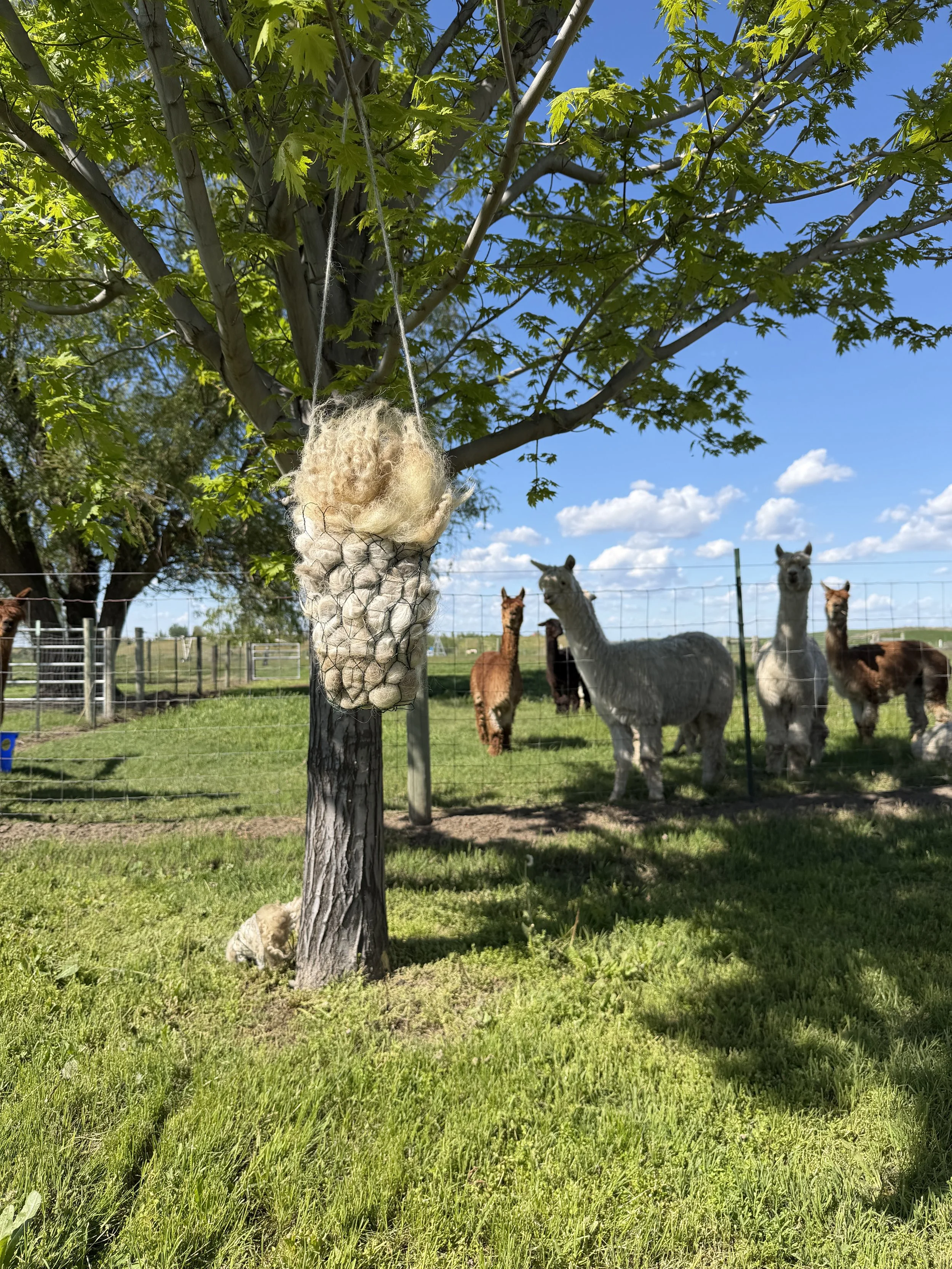
Here in Walla Walla, where the seasons are distinct and the shift into spring feels especially meaningful, those moments carry weight. After a long winter, there’s something grounding about seeing life pick back up again - gardens waking, animals shedding their heavy coats, birds beginning the work of building something new.
Nest Helpers become a small part of that cycle.
They’re not just decorative, though they do add a bit of texture and interest to a garden space. They’re functional in a way that feels aligned with the land - returning natural materials back into the environment where they belong. No synthetics, no waste, just fiber that began here on the farm finding its way into something new.
For now, they’re also something you’ll only find in person.
This season, I’m bringing Nest Helpers exclusively to the Downtown Walla Walla farmer’s market, which runs May through October. During these busiest months on the farm, shipping just isn’t something I’m able to take on - and truthfully, I’m still learning how these will be received. There’s something fitting about that, too. They’re a product rooted in place, in season, in the kind of slow exchange that happens face-to-face at the market.
And maybe that’s the heart of it.
On a small farm, very little is truly disposable. There’s a constant effort to use what you have, to respect the resources in front of you, and to find creative ways to extend their life. Nest Helpers are a reflection of that mindset - simple, practical, and rooted in care.
From alpaca to bird, from pasture to garden, they carry a small piece of the farm outward.
And if you happen to catch a glimpse of a bird gathering fiber for its nest, you’ll know exactly where that story continues.
How to Use
Hang in a tree, shrub, or near a feeder in a sheltered spot.
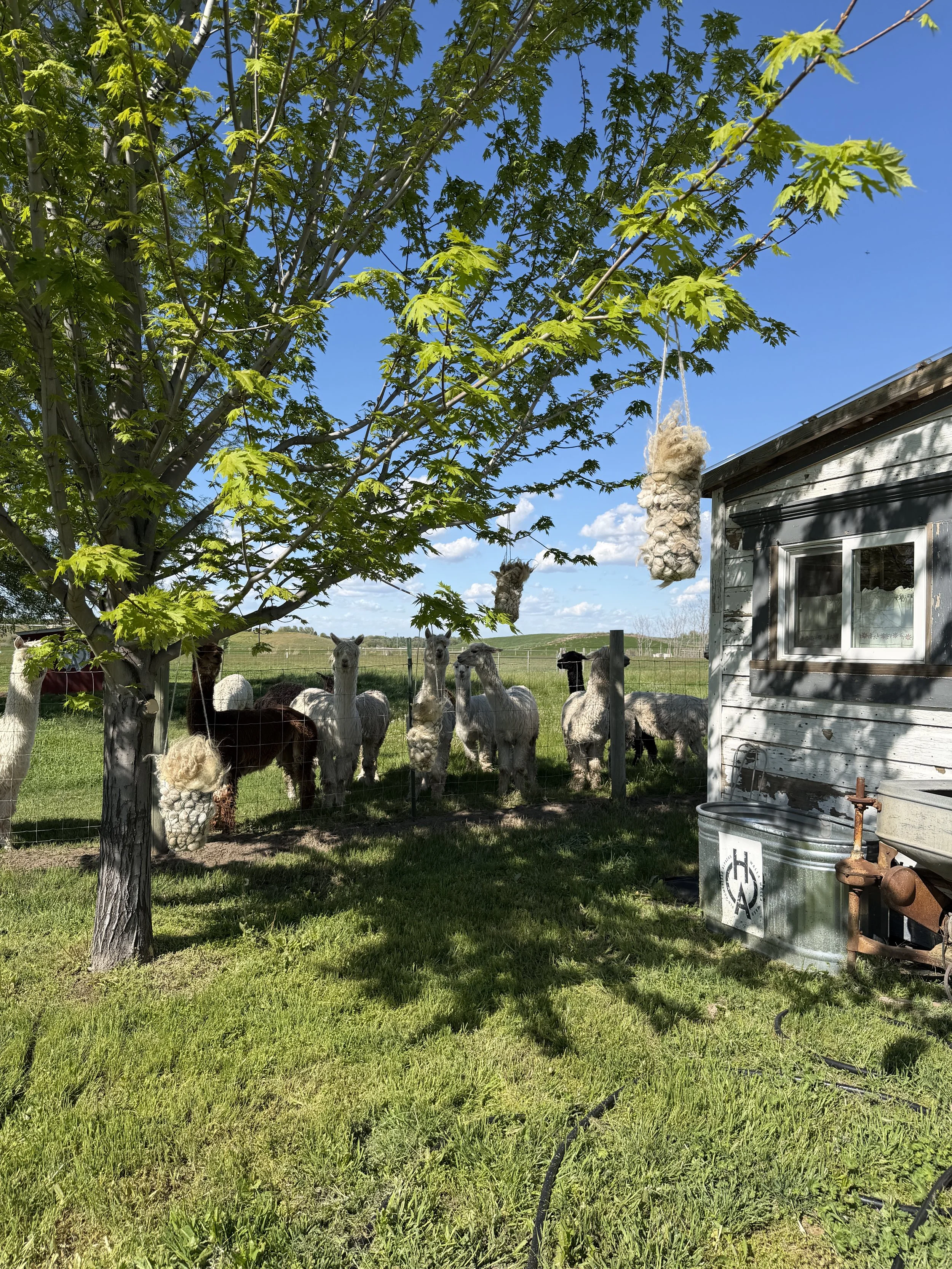
To refill
Once the fiber is gone, you can add more natural materials like:
Pet fur (clean, untreated)
Lint from your dryer (ideally, natural fibers only)
Small scraps of wool or cotton yarn
Scraps of cotton or linen fabric, cut or shredded
Bits of natural roving or fleece
Avoid synthetic materials, as they aren’t safe for birds.